
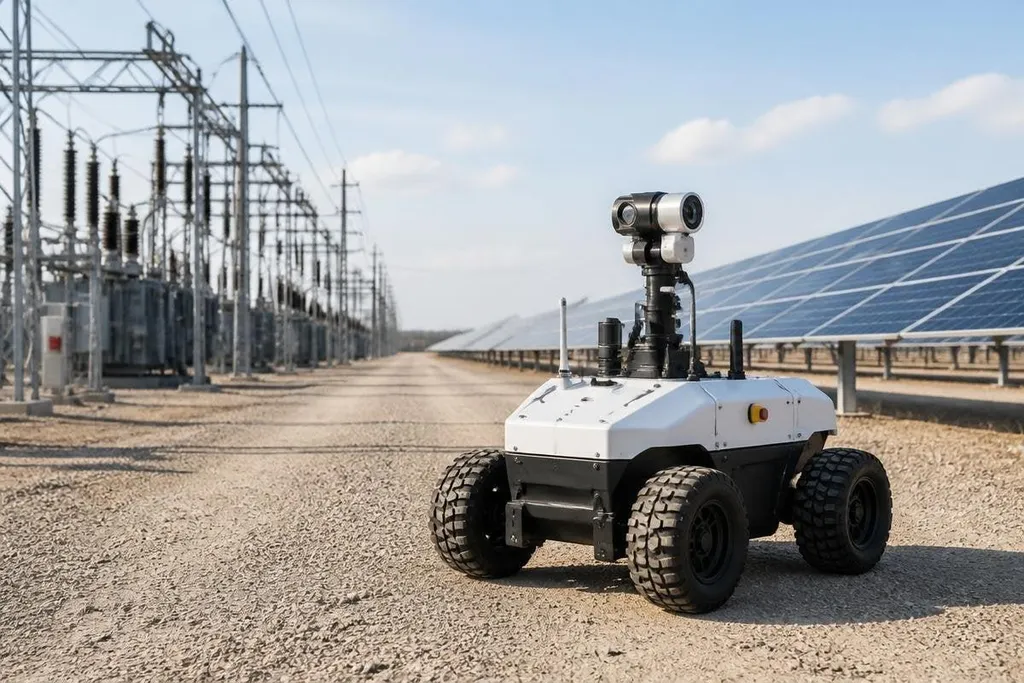
For an energy-site robot, the work has to earn money through a clear task. Inspecting a solar field, checking a substation, or moving material can count, but the buyer needs numbers before buying hardware.
This article looks at where energy robots can make money, what the business model must prove, and where the risks sit for an operator.
Quick read
- Inspection robots can cut human exposure to heat, height, electrical equipment, or unstable ground.
- The sale depends on cost per inspection, not on how many sensors the robot carries.
- A paid pilot should measure task time, human review time, failures, and repair cost.
Where the work is
Energy sites have repeated tasks spread across large or dangerous areas. One system may check cable trays, read gauges, scan panels, look for leaks, or carry tools between work points. Each job has a different value, so the same robot design won't fit every site.
Inspection is often the clearest starting point because the robot can collect images, thermal data, sound, or gas readings. The business case still needs a fixed output: a marked fault, a report for a technician, or a record that a site passed its scheduled check.
Material movement creates another opening. Mobile hardware can carry batteries, tools, or parts across a plant, but the operator must compare the robot with the current method. If a technician already makes the trip in 10 minutes, a robot with a 2-hour charging stop may save little.
Checking a turbine blade, entering a pipe, or moving near high-voltage equipment can also reduce the time people spend in that area. That benefit needs a safety plan, remote-stop method, and clear rules for when a person takes control.
How the money can work
There are three practical ways to sell an energy robot. The customer can buy the machine, pay for each inspection, or pay a monthly fee that includes the robot and support. The best choice depends on how often the task repeats and who already has staff on site.
A purchase gives the operator control, but it also brings repair, software, training, storage, and spare-part costs. A service contract moves more of that work to the supplier. Per-inspection pricing can lower the first payment, though the supplier then carries more risk when weather, terrain, or site rules slow the job.
The price should be tied to the work. Ask for cost per inspection, time spent by a human reviewer, number of site visits per charge, and the share of findings that a technician confirms. Those figures connect the robot to a budget line instead of a demo.
An inspection claim without a site, date, and measured result can’t support a service price. Energy robotics reporting from Robot24.com can tie those facts to the robot and its task before the next section asks what still needs proof.
What must be proven
Energy sites are hard on machines. Dust, rain, heat, mud, glare, radio interference, and uneven ground can change the result from one visit to the next.
A lab test says little about a robot's cost if the system stops at the first wet access road. The buyer should ask for task records from the proposed site.
Each record should show the route, operating time, battery state, human interventions, failed readings, and repair work. Video helps, but a full job log is more useful than a short clip of a successful run.
Data handling also affects the sale. Images of a plant may reveal equipment layout, security details, or faults that need fast action. The contract should state who stores the data, how long it stays available, who can access it, and what happens when the service ends.
The open business risk is follow-up work. Finding a fault has value only when someone can fix it, and a robot that sends 40 alerts for 2 real problems can add labor instead of cutting it. The supplier needs a plan for sorting alerts before the customer counts savings.
A buyer's checklist
Use these points before approving a pilot:
- Name one task: describe the inspection or delivery in one sentence.
- Set the measure: record cost, task time, human review time, and missed findings.
- Test the site: include the actual weather, route, lighting, surfaces, and radio conditions.
- Check the handoff: state how a robot finding becomes a work order for a technician.
- Price the support: include training, repairs, software fees, spare parts, and data storage.
- Set the exit rule: decide what result earns a wider rollout and what result ends the trial.
Energy robots can support a sound business when they repeat a costly or risky task and produce a result someone can act on. I'd skip any proposal that leads with hardware features before it names the task, the price per job, and the proof needed to keep paying.
The next useful number is not a robot count. It is the cost of one completed job after the robot, the human reviewer, repairs, and site delays are included.